
Heavy-Duty EV Infrastructure for Multi-Modal Transit Hubs
Transportation hubs—airports, central train stations, and ferry terminals—are the highest-density mobility nodes on earth. As global transit shifts toward zero-emission targets, these hubs must simultaneously operate as massive energy providers. Supporting thousands of daily passengers, ride-hailing fleets, and electric public transit buses requires an industrial-grade, mission-critical approach to power distribution.
At JiuRoad, we engineer macro-scale B2B EV charging ecosystems explicitly for public transit authorities and municipal planners. Our infrastructure seamlessly manages the extreme energy demands of multi-modal traffic. From high-power DC_Matrix_Matrices for rapid TNC (Transportation Network Company) turnarounds in cell-phone lots, to intelligent AC_Trickle_Networks spanning 5,000-space long-term parking garages, we mathematical ensure that every vehicle leaves your hub fully energized.
Engineered for Extreme Scale and Harsh Exposures
Transport hubs are subjected to relentless, 24/7 operational duty cycles and localized environmental extremes—from the toxic jet exhaust of airport tarmacs to the heavy saline moisture of coastal ferry terminals.
JiuRoad hardware is constructed to outlast these conditions. Enclosed in Marine-Grade_Alloys with rigorous IP65 weatherproofing and IK10 impact resistance, our systems are built to withstand abuse from heavy luggage carts and commercial vehicles. Crucially, our electronics feature advanced EMI_Shielding to ensure absolute compliance with aviation and railway telecommunication boundaries, guaranteeing zero radar or transit-signal interference.
Overcoming Common Mega-Hub Challenges
Electrifying a modern airport or train station creates terrifying mathematical demands on the local utility substation.
Multi-Tenant Revenue Splitting
Open API for Airline/Rail Apps
Active Fire Suppression Integration
DOOH Monetization
Smart Phase Balancing
Strategic Hardware Deployment by Hub Zone
| Hub User Sector | Typical Dwell Time | Recommended JiuRoad Hardware | Deployment Objective |
|---|---|---|---|
| Ride-Hailing / Taxis (TNC Lot) | 15 – 30 Minutes | 240kW - 360kW DC Matrix | High-throughput turnaround; preventing queue gridlock in staging areas. |
| Public Transit / Shuttles | 10 Min / 6 Hrs | Overhead Pantograph / 180kW DC | Absolute reliability for fixed-route airport shuttles and municipal buses. |
| Short-Term Hourly / VIP | 1 – 3 Hours | 60kW - 120kW DC Fast Charge | Premium, high-margin amenity for quick ‘meet and greet’ passenger pickups. |
| Long-Term / Economy Parking | 3 – 14 Days | 7kW AC Smart Wallbox (w/ DLB) | Mass economical deployment; utilizes algorithmic delay-charging for extreme grid efficiency. |
The Zonal Power Distribution Matrix
A transportation hub is a mini-city. Applying a blanket charging solution fails catastrophically. JiuRoad deploys a Zonal Macro-Architecture:
- Zone A: Long-Term Economy: High-density
7kW_AC_Clustersutilizing phase-rotation technology. Vehicles sit for 3 to 14 days, requiring minimum power draw over maximum time. - Zone B: The Transit / TNC Lot : Heavy
240kW_to_480kW_DC_Matrices. Used by electric airport shuttles, city buses, and ride-hailing drivers who need 20-minute turnaround times to get back to the terminal. - Zone C: VIP & Valet: Dual-gun
120kW_DC_Terminalsdeployed in high-revenue short-term garages. Perfect for quick pick-ups/drop-offs who are willing to pay a premium tariff for maximum speed.
Engineering Around Transportation Chaos
The Holiday Airport Parking Collapse
- The Pain Point: During Thanksgiving or Golden Week, 5,000 EVs park in the long-term garage over two days. The electrical draw of maintaining battery thermals for 5,000 cars over two weeks creates massive energy waste.
- The Solution:
Flight-Linked_Charging_Logic. The user inputs their return flight number via QR code. The JiuRoad DLB halts all power to the car for the entire vacation, automatically waking the charger up 12 hours prior to the flight landing.
Ride-Hailing Lot Congestion
- The Pain Point: In a cell phone waiting lot, Uber drivers leave their cars plugged into fast chargers long after they reach 100%, waiting for a lucrative ride request, blocking other empty drivers.
- The Solution: Aggressive
Algorithmic_Idle_Fees. Once a vehicle hits 90% SoC (the threshold where DC charging drops exponentially), the system enforces a massive per-minute penalty, financially coercing the driver to unplug, thereby mathematically increasing the hardware’s daily session throughput.
The Ro-Ro Ferry Terminal
- The Pain Point: Vehicles waiting to board a Roll-on/Roll-off (Ro-Ro) ferry sit in designated staging lanes for 45 to 90 minutes. Trenching heavy DC cables through these dynamic, heavy-load port lanes is unfeasible.
- The Solution:
Overhead_Cable_Managementsuspended from terminal queuing canopies. Downward-deploying fluid-cooled cables provide rapid DC top-ups while passengers wait to board, entirely preserving the ground operations for heavy boarding traffic.
Smart Management for Charging Operations
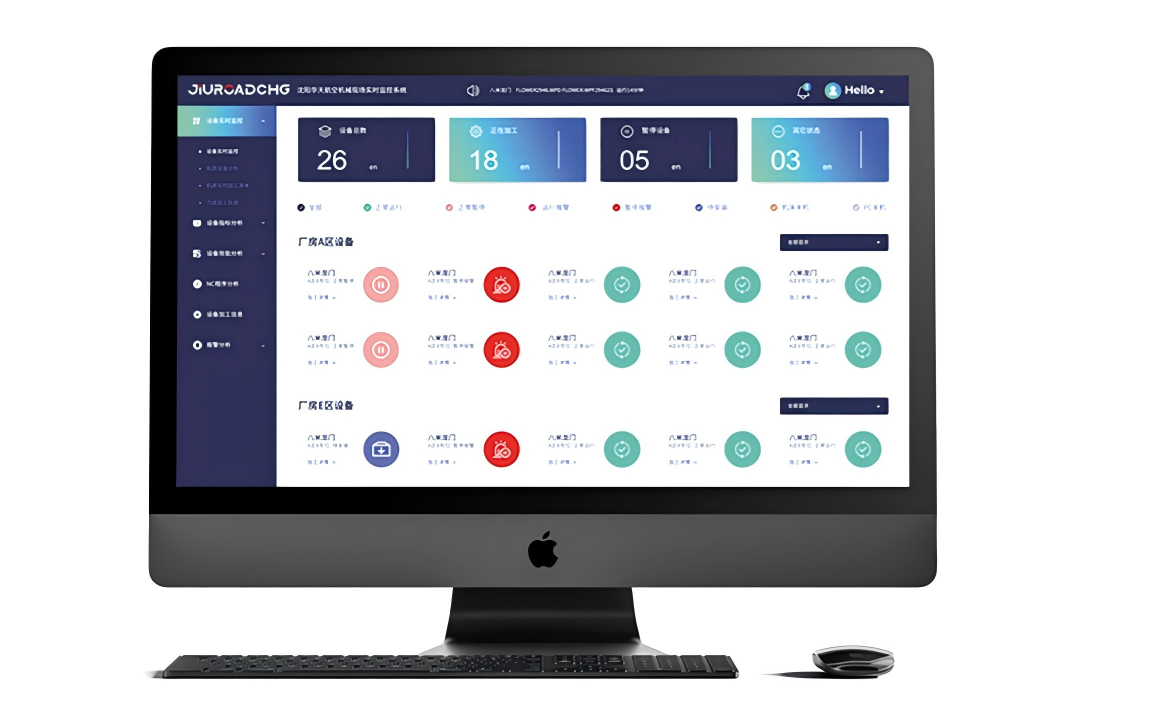
Commercial charging requires more than hardware. EVB supports daily operation with software tools that help operators monitor chargers, manage users, and improve charger availability.
Key functions include:
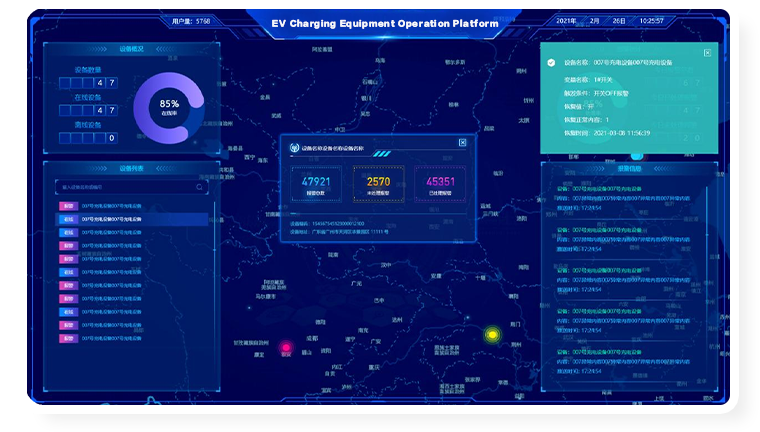
Charging Station Management System

Charging Pile Operations and Maintenance System
Charging Pile Payment Solutions

European Standard Home Charging Sharing Solutions
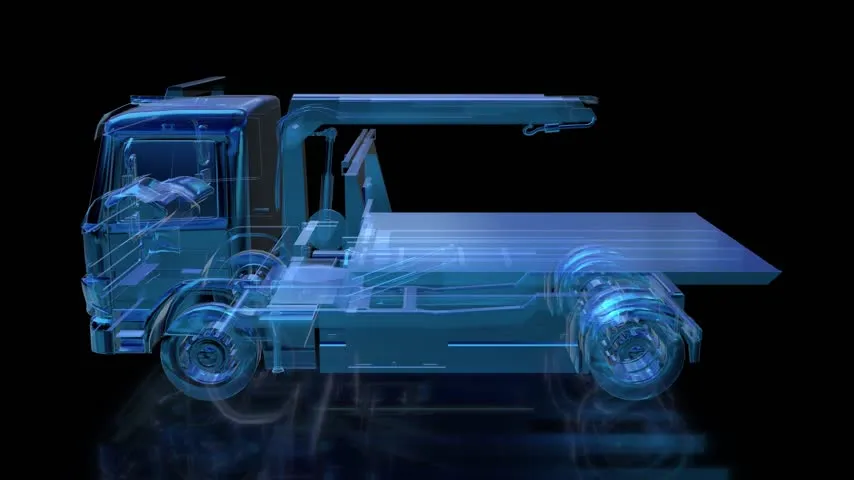
Heavy-Duty Truck Charging Fleet Management System
DC Fast Charger Case Studies
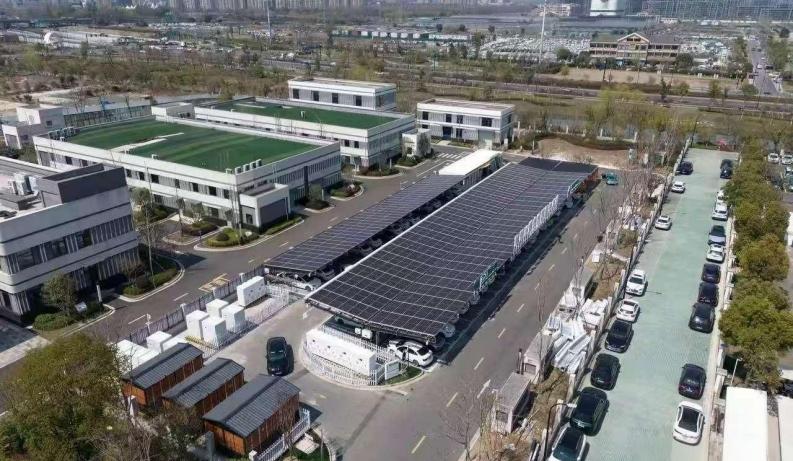
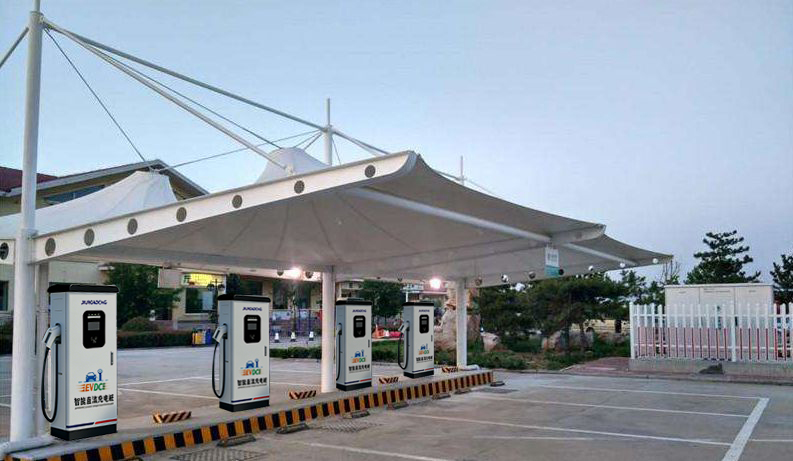
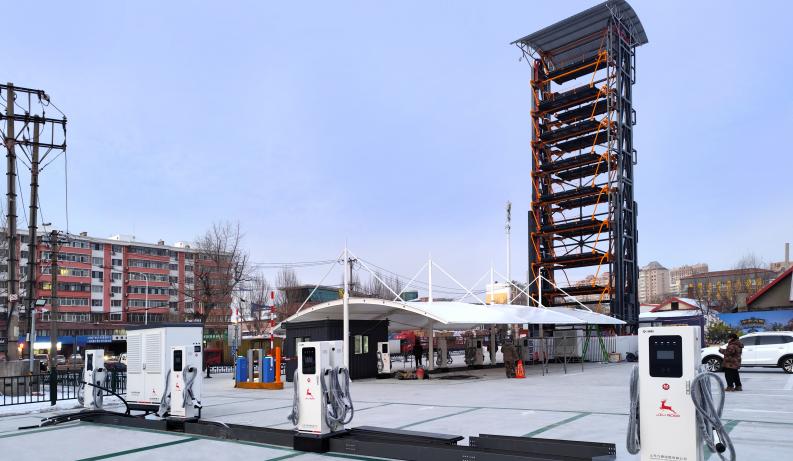
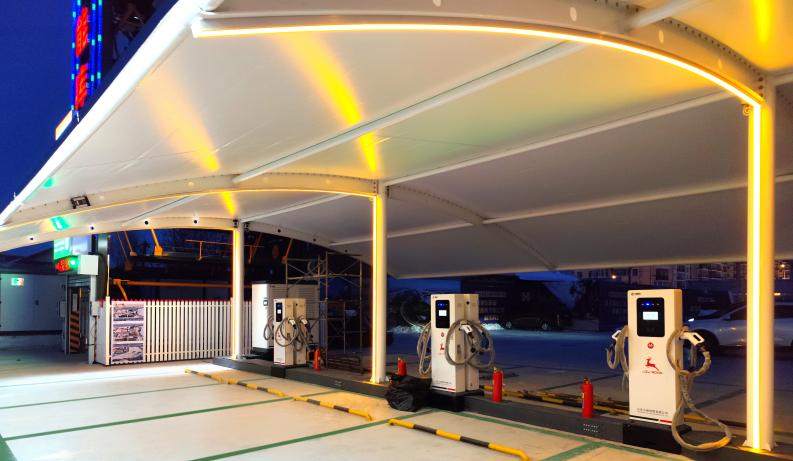
has successfully completed 575,000 EV charger projects globally, helping businesses and communities enhance their electric vehicle infrastructure with reliable DC charging stations. Our expertise ensures you receive top-notch support and competitive EV DC fast charger prices, optimizing both performance and cost-effectiveness.
From Planning to Operation
Supports customers throughout the full project lifecycle, which helps commercial property owners move from planning to operation with greater confidence and less complexity.
What Makes You Choose Transportation Hub EV Charging
Multi-Modal Scalability
One unified platform for all transit forms. Manage 11kW AC commuter chargers, 180kW fast chargers for taxis, and 600kW inverted pantographs for municipal buses entirely on one centralized JiuRoad_CSMS backend.
ALPR / Parking System API
Eradicate payment friction. Our platform natively integrates with local Auto License Plate Recognition (ALPR) cameras and centralized parking ticketing APIs. Drivers pay for their charging and parking simultaneously at the exit boom gate.
ESS / Microgrid Readiness
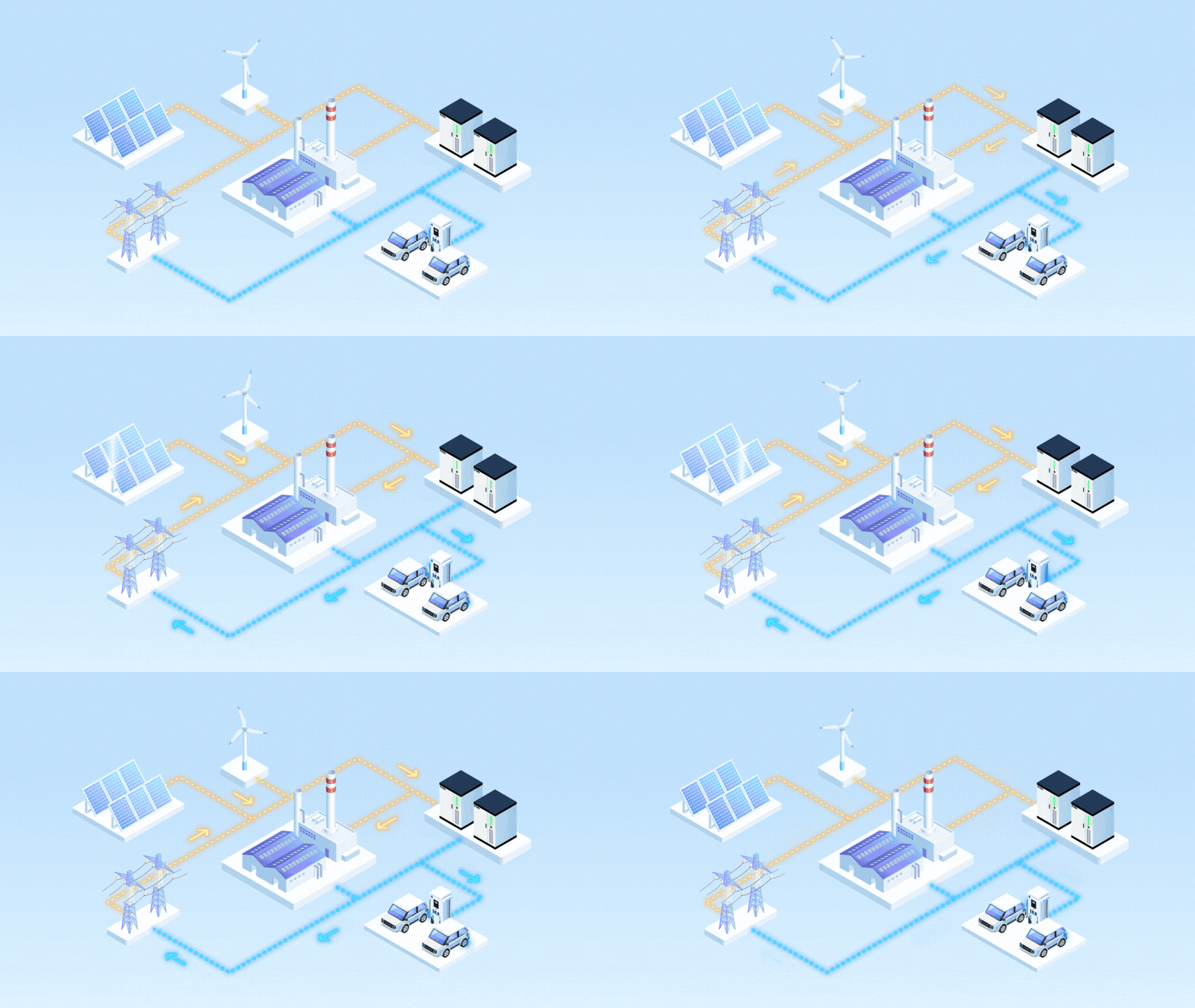
Hubs demand massive power. We seamlessly integrate DC fast charging architecture with commercial Battery Energy Storage Systems (ESS) and solar canopies, buffering your utility grid against catastrophic Megawatt spikes.
Absolute Redundancy Design
Transit cannot stop. Our Power_Matrix_Topology features hot-swappable internal power modules. If a 30kW module fails, the charger dynamically re-routes power through the remaining modules, guaranteeing 100% uptime while awaiting maintenance.
Wayfinding & VMS Integration
Keep traffic flowing. We provide live API data feeds to the hub's Variable Message Signs (VMS), guiding arriving EV drivers precisely to floors or zones with active, open charging bays.
TNC Queuing Logistics
Maximize gig-worker throughput. In ride-hailing staging areas, we deploy ultra-fast sequential charging matrices that strictly enforce idle-fee limits, guaranteeing Uber/Lyft drivers charge rapidly and exit the lot to clear space.
100+ Certifications Ready for Your DC Fast Chargers





FAQ
Can we deploy EV chargers near airport runways or fuel tank farms?
Deploying near classified hazardous zones requires strict compliance with aviation safety codes (e.g., FAA or EASA). Our Split_Matrix_Architecture allows the explosive-safe dispensing terminals to be placed in the transit zones while keeping the high-voltage rectification cabinets hundreds of meters away in safe zones.
Does JiuRoad offer Public-Private Partnership (PPP) hardware support?
Yes. We understand that transit hubs often require complex financing. JiuRoad hardware is fully certified for massive government infrastructure grants (such as NEVI in the US or AFIR in the EU) and integrates perfectly into PPP operator business models.
If the transit ticketing system goes offline, will passengers be locked into the charger?
No. Our hardware features an internal fail-safe relay caching system. If the central parking/ticketing server loses connection to the CSMS, the chargers automatically default to an “unlocked” state, ensuring that passengers never miss a flight or train due to a locked charging cable.
Ready to Build Your Next-Gen Charging Network?
Connect with our engineering and sales experts for a customized, one-stop solution proposal.