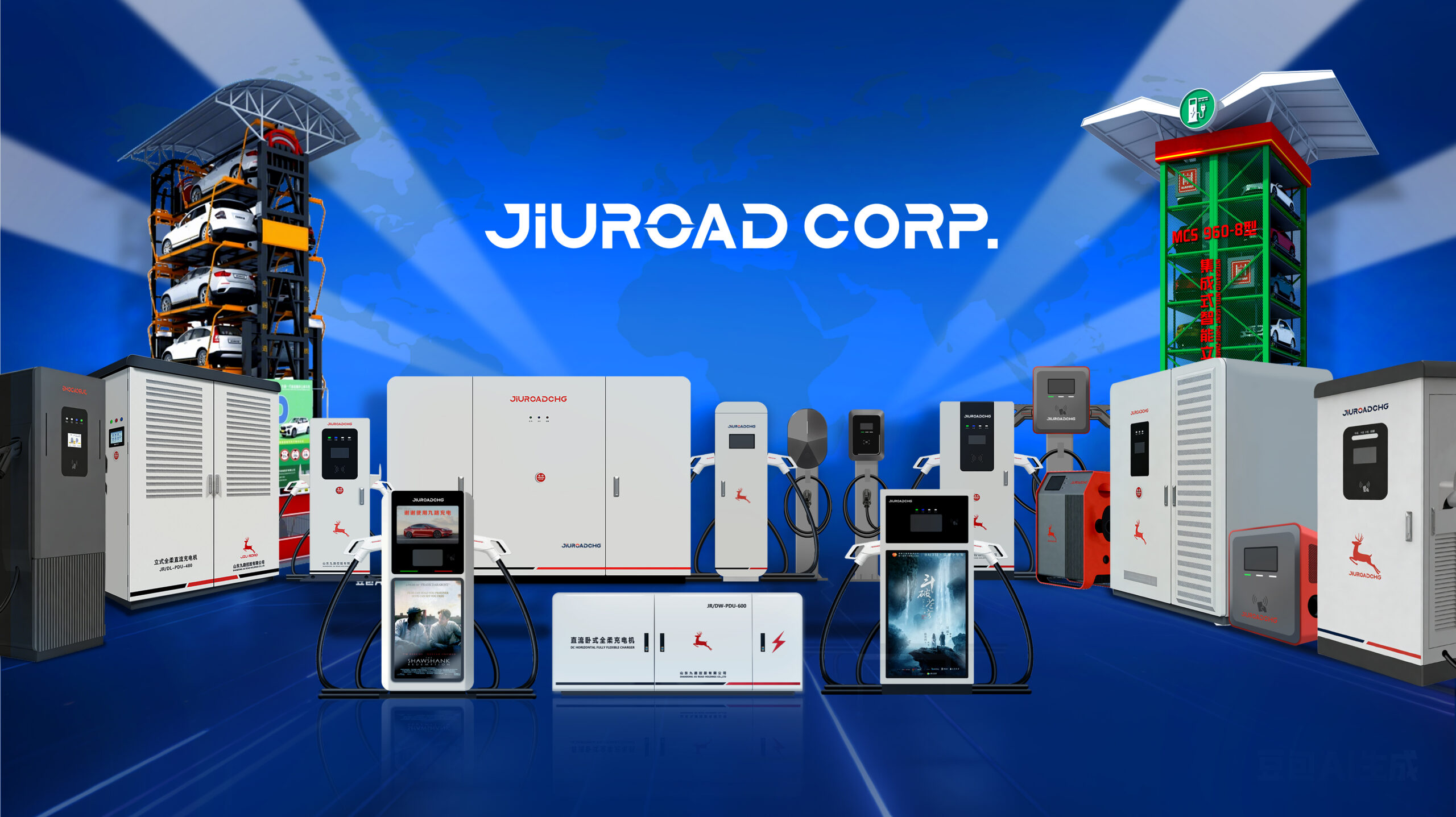
Central Asia’s electric vehicle market is expanding faster than its charging infrastructure can support, and local tech agents are stepping in to close that gap. By partnering with Jiuroad for end-to-end Charging Station Management, these agents gain access to a proven CMS platform without the burden of building one from scratch. The model addresses real operational pain points—grid instability, regulatory fragmentation, and remote maintenance. But how it actually works on the ground is where things get interesting.
Key Takeaways
- Local tech agents bridge global EV technology and Central Asian markets by navigating regional regulations, languages, and payment ecosystems.
- Jiuroad’s cloud-based CMS offers real-time monitoring, fault diagnostics, dynamic pricing, and multi-protocol compatibility for AC and DC chargers.
- Agents earn dual revenue through hardware resale margins and recurring SaaS commissions under a structured, low-risk partnership model.
- Rapid localization of payments, language interfaces, and grid compliance enables fast scaling, as demonstrated by 120 stations deployed in nine months.
- Structured onboarding includes market assessments, technical certification, and comprehensive training to ensure agents achieve full operational independence.
Why Central Asia’s EV Boom Needs Local Tech Agents
As electric vehicle adoption accelerates across Kazakhstan, Uzbekistan, and Kyrgyzstan—driven by government subsidies, rising fuel costs, and expanding Chinese EV imports—the region faces a critical infrastructure gap that manufacturers alone cannot close. Charging networks require localized deployment, ongoing maintenance, and software management tailored to regional grid conditions and user expectations.
This is where local tech agents become indispensable. They bridge the operational divide between global hardware suppliers and on-the-ground realities—navigating regulatory frameworks, language barriers, and payment ecosystems unique to each market. Their role reflects a broader local tech evolution, positioning Central Asia not as a passive recipient of foreign technology but as an active participant in building sustainable transportation infrastructure. Strategic partnerships with platforms like Jiuroad amplify this capability markedly.
What Jiuroad’s Charging Station CMS Actually Does
Jiuroad’s Charging Station CMS operates as a centralized cloud platform that gives tech agents full operational control over distributed charging networks—from real-time device monitoring and fault diagnostics to dynamic pricing configuration, energy load management, and user payment processing. The system consolidates hardware telemetry across multiple station sites into a single dashboard, enabling remote troubleshooting without dispatching field technicians for every alert.
Among the core Jiuroad advantages: the CMS supports multi-protocol compatibility with AC and DC chargers, localized language interfaces, and flexible billing structures suited to Central Asian market conditions. These integrated charging solutions allow tech agents to manage entire regional deployments efficiently, scaling operations without proportional overhead increases. The platform effectively transforms local partners into full-service charging infrastructure operators.
How the Jiuroad Partnership Model Works for Agents
Each Jiuroad tech agent partnership follows a structured onboarding framework designed to minimize capital risk while accelerating time-to-market across Central Asian territories. Agents receive white-label CMS access, localized technical documentation, and dedicated integration support from deployment through ongoing operations.
The partnership dynamics center on shared accountability: Jiuroad maintains platform infrastructure and software updates, while agents handle local client acquisition, hardware sourcing relationships, and regulatory navigation. This division leverages each party’s core competencies without overlap.
Key agent benefits include tiered revenue sharing, exclusive territorial licensing, and access to Jiuroad’s expanding feature roadmap. Agents retain direct client relationships and billing control, ensuring sustainable local business models rather than dependence on a single vendor’s commercial terms.
End-to-End CMS: From Hardware to Software Integration
Jiuroad’s end-to-end CMS architecture guarantees seamless hardware-software synergy, enabling Central Asian agents to deploy fully integrated digital signage and content management ecosystems without relying on fragmented third-party solutions. This unified platform integration consolidates device control, content scheduling, and real-time monitoring into a single operational layer, reducing technical overhead for regional partners. By aligning proprietary hardware with purpose-built software, the system delivers consistent performance across diverse deployment environments common throughout Central Asian markets.
Seamless Hardware-Software Synergy
The convergence of proprietary hardware and intelligent software within a single ecosystem defines the core value proposition that Jiuroad brings to its Central Asian tech agent network. This seamless hardware-software synergy eliminates system compatibility barriers that traditionally fragment charging infrastructure deployments, driving measurable operational efficiency gains.
Key advantages of this integrated approach include:
- Unified user interface that simplifies station monitoring and cost management across distributed networks
- Embedded data analytics delivering real-time performance insights directly from hardware sensors to cloud dashboards
- Pre-validated firmware-software pairing that reduces deployment timelines and troubleshooting complexity
- Enhanced user experience through consistent charging protocols and responsive station behavior
This architectural cohesion empowers Central Asian partners to scale confidently, maintaining technical reliability without managing disparate vendor ecosystems.
Unified Platform Integration Benefits
Every layer of Jiuroad’s end-to-end Charging Management System (CMS) from embedded hardware controllers to cloud-based fleet management operates within a single unified platform, giving Central Asian tech agents direct operational command over their entire charging infrastructure.
This unified architecture eliminates fragmented vendor ecosystems that typically plague multi-component deployments. Firmware updates, diagnostics, billing, and load balancing converge through one interface, reducing operational complexity while enhancing user experience for both station operators and EV drivers. Central Asian partners gain real-time visibility across dispersed networks without toggling between disconnected systems.
Critically, platform scalability guarantees that agents expanding from a handful of chargers to hundreds across Kazakhstan, Uzbekistan, or neighboring markets encounter zero architectural bottlenecks. Jiuroad’s integrated design future-proofs regional investments, translating technical cohesion into sustained competitive advantage.
Real-Time Monitoring That Keeps Stations Running
Monitoring dashboards built into Jiuroad’s fuel station management systems feed live operational data—tank levels, flow rates, pump status, and transaction logs—directly to both station operators and their partnered Central Asian tech agents. This charging technology infrastructure enables immediate fault detection and rapid response across dispersed station networks.
Key monitoring capabilities include:
- Automated alerts that flag equipment anomalies before they escalate into costly downtime
- Usage analytics that reveal peak demand patterns, enabling proactive resource allocation
- Remote diagnostics allowing tech agents to troubleshoot issues without dispatching field teams
- Centralized reporting that consolidates multi-site performance into actionable dashboards
Revenue Streams Jiuroad Opens for Local Partners
Jiuroad’s partner model generates two distinct income channels for Central Asian agents: margin-based earnings on hardware resale and recurring commissions tied to SaaS subscription renewals. Hardware margins allow agents to capture upfront revenue from station sales while building a growing base of software-linked accounts that yield predictable monthly income. This dual-stream structure aligns agent incentives with long-term platform adoption, giving local partners a financial stake in both initial deployment and ongoing station operation.
Hardware Resale Margins
The hardware resale component represents one of the most immediate and tangible revenue streams available to Central Asian tech agents who formalize partnerships with Jiuroad. Through structured hardware trend analysis, agents can identify regional demand patterns for AC and DC charging units, aligning inventory procurement with local infrastructure expansion timelines. A disciplined profit strategy evaluation guarantees margins remain competitive while sustaining long-term client relationships.
Key margin drivers include:
- Tiered pricing structures based on order volume and regional exclusivity agreements
- Bundled hardware-software packages that increase per-unit transaction value
- After-sale maintenance contracts generating recurring revenue beyond initial resale
- Currency arbitrage opportunities leveraging favorable Central Asian exchange dynamics against RMB-denominated procurement costs
Agents who master these levers position themselves as indispensable regional infrastructure partners.
SaaS Subscription Commissions
Beyond one-time hardware transactions, SaaS subscription commissions offer Central Asian agents a compounding revenue layer tied directly to the operational lifecycle of every deployed charging station. As SaaS trends accelerate across the region, Jiuroad’s subscription models guarantee agents earn recurring income through clearly defined commission structures that reward sustained engagement.
Agent incentives scale with portfolio growth—higher station deployments release elevated revenue sharing tiers. Jiuroad’s pricing strategies remain competitive enough to drive user retention while preserving healthy margins for partners. Dedicated sales support equips agents with localization tools, onboarding resources, and performance dashboards that streamline client acquisition. This framework transforms tech partnerships from transactional relationships into long-term growth engines, positioning agents as indispensable regional operators. For those pursuing market expansion, recurring SaaS commissions deliver financial predictability that one-time sales cannot match.
CMS Features That Matter Most in Central Asian Markets
Because Central Asian markets operate across multiple languages, currencies, and regulatory frameworks, the CMS capabilities that tech agents prioritize when evaluating Jiuroad’s platform differ sharply from those valued in more homogeneous regions.
Key features driving partner adoption include:
- Multi-language and multi-currency support enabling seamless operator deployment across Kazakhstan, Uzbekistan, and Kyrgyzstan without costly localization workarounds.
- Remote diagnostics and firmware updates critical for managing stations across vast distances where on-site maintenance proves impractical.
- Regulatory compliance modules allowing agents to configure reporting outputs aligned with each country’s evolving sustainable energy solutions mandates.
- Open API architecture supporting integration with local payment gateways and government platforms that vary by jurisdiction.
These capabilities position tech agents as enablers of charging station innovation rather than passive resellers, reinforcing long-term partnership value.
How Agents Handle Installation Without In-House Engineering
Agents across Central Asia overcome the absence of dedicated engineering teams by outsourcing physical installation work to vetted local contractors who understand regional infrastructure constraints. Jiuroad supplements this model with remote technical support, enabling real-time troubleshooting and configuration guidance that reduces on-site complexity. Pre-configured hardware kits further streamline deployment, allowing contracted technicians to execute standardized setups with minimal specialized training.
Outsourcing To Local Contractors
Most Central Asian tech agents representing Jiuroad lack dedicated engineering teams, instead leveraging established networks of local contractors—electricians, mechanical fitters, and automation specialists—who possess hands-on familiarity with regional infrastructure standards and building codes. This outsourcing model delivers cost effective solutions while maintaining installation quality across diverse deployment environments.
Key local contractor advantages include:
- Regional code compliance—contractors navigate municipal permitting and grid interconnection requirements efficiently.
- Rapid mobilization—pre-vetted teams deploy quickly to urban and remote sites without lengthy onboarding.
- Infrastructure adaptability—local expertise guarantees proper integration with varying power grid configurations across Kazakhstan, Uzbekistan, and Kyrgyzstan.
- Ongoing maintenance access—proximity enables swift troubleshooting and hardware servicing post-installation.
This partnership structure allows agents to scale Jiuroad CMS deployments without capital-intensive workforce expansion.
Jiuroad Remote Technical Support
Virtually every Jiuroad CMS installation across Central Asia relies on the manufacturer’s remote technical support infrastructure to bridge the gap between local contractor execution and factory-level engineering expertise. Agents coordinate real-time remote troubleshooting sessions between Jiuroad engineers and on-site contractors, ensuring commissioning accuracy without maintaining in-house engineering teams.
| Support Channel | Function | Availability |
|---|---|---|
| Video-guided commissioning | Real-time installation oversight | During deployment phase |
| Remote diagnostics portal | Fault identification and resolution | 24/7 post-installation |
| Technical training webinars | Contractor skill development | Monthly scheduled sessions |
| Firmware update deployment | Over-the-air system optimization | As released |
| Escalation engineering | Complex fault resolution | Priority response within 4 hours |
This layered technical training framework empowers agents to deliver factory-caliber service quality across geographically dispersed Central Asian markets without permanent engineering overhead.
Leveraging Pre-Configured Hardware Kits
Pre-configured hardware kits from Jiuroad eliminate the most technically demanding phase of CMS deployment—component selection, wiring harness assembly, and controller calibration—by shipping each installation as a factory-matched, plug-ready package tailored to the specific sign configuration ordered.
The pre configured advantages extend across every stage of the agent’s workflow:
- Reduced error margins Factory-tested wiring harnesses and labeled connectors prevent field miswiring.
- Faster site turnaround Agents complete installations in hours rather than days.
- Scalable hardware kit customization Jiuroad adjusts module counts, power ratings, and enclosure specs per regional requirements.
- Lower technician skill threshold Structured assembly steps allow trained installers without electrical engineering backgrounds to execute deployments confidently.
This partnership model positions Central Asian agents as turnkey service providers without maintaining dedicated engineering teams.
Scaling From One Charging Station to a Regional Network
Deploying a single Jiuroad charging station establishes proof of concept, but Central Asian tech agents accelerate real returns by architecting scalable regional networks that match local demand corridors—intercity highways, urban logistics hubs, and commercial fleet depots. Strategic charging infrastructure expansion requires regional collaboration between agents, municipal authorities, and fleet operators.
| Expansion Phase | Key Action | Jiuroad CMS Capability |
|---|---|---|
| Pilot | Single-site deployment and data collection | Real-time utilization analytics |
| Corridor | Link 3 stations along high-traffic routes | Centralized multi-site monitoring |
| Regional Hub | Integrate urban and peri-urban clusters | Load balancing across networked stations |
| Fleet Integration | Onboard commercial operators | Dedicated fleet management dashboards |
| Full Network | Unified cross-border operations | Multi-currency billing and remote diagnostics |
Each phase compounds operational data, strengthening the agent’s negotiating position with landlords, utilities, and government stakeholders.
Maintenance and Remote Diagnostics Through Jiuroad’s Platform
Three operational realities define charging infrastructure maintenance in Central Asia: vast distances between service sites, limited availability of specialized EV technicians, and extreme temperature swings that stress hardware components. Jiuroad’s platform addresses each through integrated remote diagnostics and predictive maintenance powered by real-time data analytics.
The system enables regional agents to manage distributed assets efficiently:
- Fault detection alerts identify component degradation before failures occur, reducing costly on-site dispatches.
- Remote firmware updates keep chargers compliant with evolving protocols without technician travel.
- Thermal performance monitoring tracks hardware behavior across seasonal extremes, triggering preemptive interventions.
- Centralized dashboards consolidate station health metrics, allowing agents to prioritize maintenance across geographically dispersed networks.
This diagnostic architecture transforms regional partners from reactive service providers into proactive infrastructure operators.
Pricing, Licensing, and Profit Margins for Tech Agents
Operational efficiency gains from remote diagnostics directly influence the financial architecture available to Jiuroad’s regional tech agents—lower maintenance overhead widens the margin corridor on each deployed unit. Jiuroad’s licensing models offer tiered access, enabling agents to calibrate cost structures against local market analysis and demand density.
Pricing strategies emphasize pricing transparency, giving agents clear visibility into hardware, software, and service fees. This clarity supports realistic revenue projections and measurable ROI expectations across deployment timelines. Profit optimization hinges on volume thresholds and performance-based agent incentives structured into partnership agreements.
Within Central Asia’s competitive landscape, Jiuroad-aligned agents leverage factory-direct procurement advantages that independent operators cannot replicate. These structural efficiencies translate into defensible margins, positioning tech agents to capture market share while sustaining reinvestment capacity across expanding station networks.
How Jiuroad CMS Compares to Building Your Own System
When Central Asian tech agents evaluate whether to adopt Jiuroad’s centralized management system or engineer a proprietary platform from scratch, the calculus extends well beyond initial development costs. A thorough cost analysis reveals that custom solutions demand sustained investment in protocol updates, cybersecurity patches, and OCPP compliance—burdens Jiuroad absorbs through continuous platform iterations.
Key differentiators include:
- Time-to-market: Jiuroad’s ready-built CMS deploys in weeks versus 128 months for proprietary builds.
- Maintenance overhead: Custom solutions require dedicated engineering teams for ongoing protocol support.
- Scalability: Jiuroad’s architecture handles multi-site expansion across diverse Central Asian regulatory environments without re-engineering.
- Interoperability: Pre-certified hardware-software integration eliminates costly compatibility testing.
Regional partners leveraging Jiuroad redirect capital toward market penetration rather than redundant infrastructure development.
Regulatory and Grid Challenges Agents Should Expect
Agents operating across Central Asian markets must navigate evolving compliance standards that differ markedly between jurisdictions—what passes regulatory review in Kazakhstan may face additional scrutiny in Uzbekistan or Kyrgyzstan. Grid capacity limitations present a persistent technical constraint, as aging infrastructure in many regions restricts the scale and reliability of deployments that Jiuroad’s CMS can manage. Understanding these cross-border policy variations positions agents to advise clients accurately and structure partnerships that account for regulatory lead times and infrastructure realities on the ground.
Evolving Compliance Standards
As Central Asian energy markets mature and grid infrastructure modernizes at varying rates across the region, agents partnering with Jiuroad must anticipate a compliance landscape that is neither static nor uniform. The evolving infrastructure across Kazakhstan, Uzbekistan, and neighboring states demands adaptive CMS platforms capable of meeting shifting technical mandates. Jiuroad equips agents to navigate this regulatory landscape through:
- Real-time firmware updates aligned with national electrical safety codes as they evolve
- Configurable metering protocols meeting diverse billing and grid-reporting requirements across jurisdictions
- Interoperability standards compliance, including OCPP adaptability for cross-border charging network integration
- Automated audit logging that satisfies both current and anticipated data governance frameworks
Agents who embed compliance readiness into deployment strategy position themselves as indispensable regional partners rather than transient vendors.
Grid Capacity Limitations
Constraint—whether in transmission bandwidth, transformer headroom, or substation load tolerance—defines the operational reality agents will confront across Central Asian power networks. Aging Soviet-era infrastructure imposes hard ceilings on localized grid demand, particularly in peri-urban corridors where charging station deployments are most commercially viable.
Jiuroad’s CMS platform addresses these constraints through intelligent load scheduling and integration-ready energy storage modules that buffer peak consumption against transformer limits. Agents leveraging this architecture can negotiate grid connection permits with quantifiable load profiles, reducing approval friction with regional utilities.
Strategic deployment of energy storage also enables stations to operate profitably in zones where grid demand surcharges would otherwise erode margins. Partnering with Jiuroad equips agents to transform infrastructure limitations from project-killing obstacles into manageable engineering parameters.
Cross-Border Policy Variations
Because each Central Asian state maintains distinct regulatory frameworks for EV infrastructure—from Kazakhstan’s evolving technical standards and subsidy mechanisms to Uzbekistan’s import tariff structures and Kyrgyzstan’s nascent permitting protocols—agents operating across multiple markets face a compliance landscape that shifts at every border crossing.
Key cross border regulations challenges include:
- Divergent certification requirements for charging hardware, demanding market-specific technical documentation and testing.
- Inconsistent metering and billing standards that complicate unified CMS deployment across jurisdictions.
- Varying foreign ownership and operational licensing rules affecting partnership structures and revenue flows.
- Absence of regional policy harmonization frameworks, requiring agents to maintain parallel compliance workflows per country.
Jiuroad’s modular CMS architecture enables agents to configure jurisdiction-specific parameters within a single platform, reducing redundant infrastructure while maintaining full regulatory alignment across borders.
Three Central Asian Agents Already Winning With Jiuroad
Each agent’s partnership success stems from Jiuroad’s modular CMS architecture, which allows rapid localization of payment protocols, language interfaces, and grid compliance parameters. One Kazakh distributor scaled from pilot to 120 operational stations within nine months. An Uzbek partner secured municipal fleet contracts by bundling Jiuroad’s remote diagnostics with on-ground maintenance teams. These results validate the agent-driven model as commercially repeatable across the region.
Your Roadmap to Becoming a Jiuroad CMS Partner
A structured onboarding pathway separates Jiuroad’s agent program from generic reseller arrangements.
- Discovery Call & Market Assessment Jiuroad’s regional team evaluates your territory’s market potential, existing infrastructure, and regulatory landscape across Central Asian markets.
- Technical Certification Agents complete CMS platform training covering firmware deployment, OCPP integration, and remote diagnostics to guarantee operational independence.
- Pilot Deployment Launch a controlled station cluster to demonstrate platform reliability and gather localized performance data for scaling decisions.
- Exclusive Territory Agreement Qualified agents secure defined geographic rights, co-branded marketing assets, and tiered pricing structures.
Partnership opportunities expand as agents prove deployment competence. Jiuroad provides continuous technical updates, assuring partners maintain competitive advantage throughout Central Asia’s rapidly evolving EV charging sector.
Conclusion
Central Asian charging champions stand at a compelling crossroads—where regional readiness meets robust, reliable CMS technology. By partnering with Jiuroad, tech agents gain a proven platform that pairs powerful real-time monitoring with practical, partnership-driven support. This collaboration cultivates capable local networks, conquers complex regulatory corridors, and channels consistent revenue streams. For forward-focused agents seeking scalable EV infrastructure solutions, Jiuroad’s end-to-end CMS delivers the technical backbone that transforms regional potential into lasting, lucrative leadership.