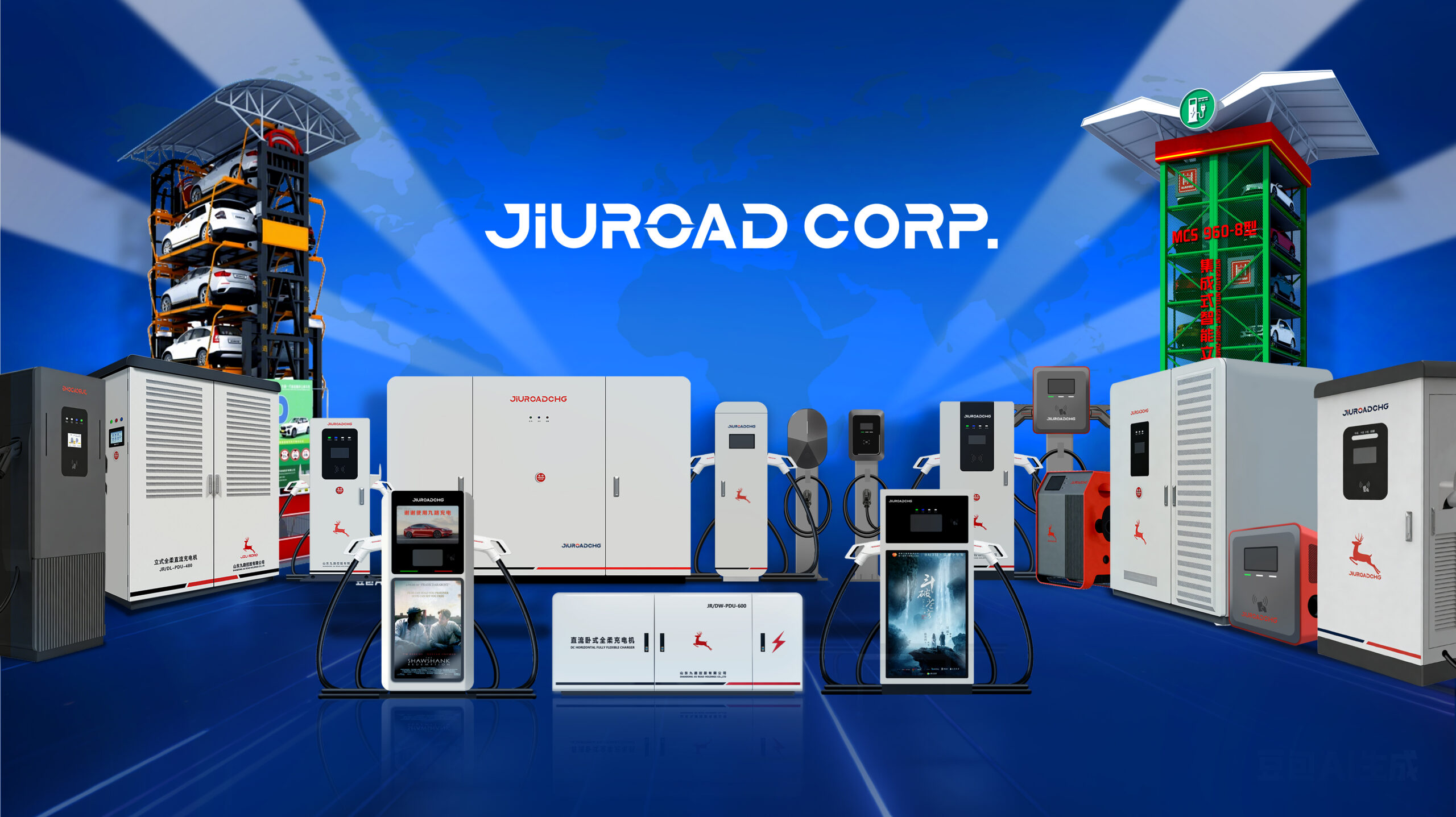
Oman’s solar irradiance levels—averaging 5.5 to 6.0 kWh/m² daily—position the sultanate as an ideal candidate for large-scale solar carport deployment. When paired with 320KW dual-gun accelerated charging systems, these installations can simultaneously serve two vehicles while generating surplus energy for grid injection or battery storage. The technical and economic parameters of this integration, however, present complexities that demand careful analysis.
Key Takeaways
- Oman’s high solar irradiance of 5.5 kWh/m² daily enables photovoltaic systems to generate over 1,900 kWh/kWp annually for carport installations.
- 320KW dual-gun chargers reduce 80% charge time to 15-20 minutes, enabling daily throughput of 48-64 vehicles per station.
- Battery storage with 85-95% round-trip efficiency enables night charging capabilities, extending EV services beyond solar production hours.
- Vision 2040 incentives reduce installation costs by 10-15% through accelerated permitting, tax exemptions, and green bond financing options.
- Implementation requires 18-24 months from feasibility to commissioning, including mandatory 45-day public consultations and environmental impact assessments.
Why Oman’s Desert Sun Makes Solar Carports a Strategic Advantage
Oman receives an average global horizontal irradiance of 5.5 kWh/m² per day across most of its territory, positioning the sultanate among the world’s highest-potential solar markets. This exceptional solar radiation benefits EV infrastructure deployment by maximizing energy harvest per installed panel.
Desert climate efficiency compounds these advantages. Low humidity and minimal cloud cover guarantee consistent photovoltaic output exceeding 1,900 kWh/kWp annually. Solar carports serve dual functions: generating clean electricity while protecting vehicles from extreme temperatures that degrade battery performance.
The synergy between 320KW dual-gun chargers and solar canopy systems reduces grid dependency during peak demand periods. Strategic carport orientation captures maximum irradiance while providing essential shading, creating infrastructure that addresses both energy generation and thermal management requirements simultaneously.
How 320KW Dual-Gun Chargers Outperform Standard EV Infrastructure
High-power charging infrastructure fundamentally transforms EV deployment economics through accelerated throughput capacity. The 320KW dual-gun configuration delivers simultaneous charging sessions while maintaining peak charger efficiency across both ports, effectively doubling station utilization rates compared to single-output alternatives.
| Parameter | Standard 50KW DC | 320KW Dual-Gun |
|---|---|---|
| Charge Time (80%) | 60-90 minutes | 15-20 minutes |
| Daily Vehicle Throughput | 8-12 vehicles | 48-64 vehicles |
| Power Outputs | Single port | Dual simultaneous |
These power outputs enable commercial fleet operators to minimize vehicle downtime while maximizing asset productivity. The dual-gun architecture provides operational redundancy—if one port requires maintenance, the station remains functional. This infrastructure approach aligns with Oman’s strategic objectives for rapid EV adoption across transportation networks.
The Technical Blueprint for Solar Carport and Charger Integration
Integrating solar carport structures with high-capacity EV charging systems creates a synergistic infrastructure model that addresses both energy generation and consumption within a unified footprint. The technical architecture requires precise calculations balancing photovoltaic array capacity, inverter specifications, and charging load demands.
Solar energy efficiency optimization necessitates south-facing panel orientation with tilt angles calibrated to Oman’s latitude coordinates. A typical 320KW dual-gun installation requires approximately 400-500KW of solar capacity to achieve meaningful grid offset, accounting for regional irradiance patterns averaging 5.5-6.5 kWh/m²/day.
Electric mobility solutions at this scale demand robust power management systems incorporating DC-DC converters, battery buffers, and smart load-balancing algorithms. The integration architecture must accommodate bidirectional power flow, enabling excess generation export while maintaining charging priority during peak demand periods.
Energy Yield Calculations for Oman’s Solar Carport Installations
Calculating accurate energy yields for solar carport installations consistently requires site-specific analysis incorporating Oman’s distinct climatic variables. The sultanate’s Global Horizontal Irradiance averages 5.5-6.5 kWh/m²/day, translating to substantial generation potential for properly configured systems.
Solar efficiency calculations must account for temperature coefficients, as Oman’s ambient temperatures frequently exceed 45°C during summer months. High-quality monocrystalline panels typically experience 0.3-0.5% efficiency degradation per degree above 25°C, necessitating thermal management strategies.
A 320KW carport installation in Muscat can generate approximately 550-600 MWh annually, assuming 15% system losses from inverter conversion, soiling, and cable resistance. Performance ratio modeling indicates ideal energy yield when panels maintain 18-22% solar efficiency through adequate ventilation spacing beneath carport structures and regular cleaning protocols addressing desert dust accumulation.
Grid Connection Requirements Under Oman’s Renewable Energy Framework
Connecting solar carport systems to Oman’s electrical grid mandates compliance with the Authority for Public Services Regulation’s technical standards and the Oman Electricity Transmission Company’s interconnection protocols. Grid interconnection standards require inverters meeting IEEE 1547 specifications, anti-islanding protection, and power quality parameters within prescribed tolerances.
| Requirement | Specification | Compliance Authority |
|---|---|---|
| Voltage Regulation | ±5% nominal | OETC |
| Frequency Range | 49.5-50.5 Hz | APSR |
| Power Factor | 0.95 minimum | OETC |
| Protection Systems | IEEE 1547 compliant | APSR |
| Metering Equipment | Bidirectional certified | Distribution licensee |
Renewable energy policies under Oman Vision 2040 streamline approval pathways for installations exceeding 100kW capacity. Applicants must submit single-line diagrams, protection coordination studies, and load flow analyses demonstrating grid stability maintenance during peak charging operations.
Cost Breakdown for Solar Carport Charging Stations in the Gulf Region
Beyond regulatory compliance, project viability for solar carport charging stations hinges on detailed capital and operational expenditure modeling specific to Gulf Cooperation Council market conditions.
Installation costs for integrated 320KW dual-gun systems range from $180,000-$250,000, encompassing site preparation, structural mounting, and electrical infrastructure. Equipment selection markedly impacts upfront expenditure, with premium inverters and panels commanding 15-20% premiums but delivering superior performance ratios.
Maintenance expenses average 1.5-2% of capital costs annually. Government incentives, including Oman’s renewable energy subsidies, reduce effective costs by 10-15%. Strategic financing options through utility partnerships enable favorable debt structures.
ROI analysis indicates 6-8 year payback periods under current tariff structures. Technology advancements in bifacial modules and smart charging algorithms continue improving long term savings projections, with internal rates of return exceeding 12% for ideally configured installations.
How Vision 2040 Incentives Reduce Your Project Investment
Several financial mechanisms under Oman’s Vision 2040 framework directly offset capital requirements for renewable energy infrastructure investments. The Authority for Public Services Regulation provides accelerated permitting pathways, reducing pre-construction timelines by approximately 40%. Tax exemptions on imported solar equipment and EV charging hardware eliminate duties ranging from 5-12% of component costs.
Project financing structures benefit from sovereign green bonds issued through the Oman Investment Authority, offering preferential interest rates 150-200 basis points below conventional commercial lending. Investment strategies incorporating these instruments achieve internal rates of return exceeding 14% for integrated solar carport-charger installations.
Additionally, the Public Authority for Electricity and Water guarantees grid connection priority for renewable projects exceeding 100KW capacity, eliminating infrastructure uncertainty that typically adds 8-15% contingency buffers to project budgets.
Site Selection Criteria for Maximum Solar Harvest and EV Traffic
Geographic coordinates within Oman’s northern coastal corridor between Muscat and Sohar yield annual global horizontal irradiance values of 2,100-2,250 kWh/m², establishing baseline parameters for solar carport feasibility assessments.
Site selection criteria for integrated solar-EV infrastructure require systematic evaluation of multiple variables:
- Traffic density analysis: Minimum 500 daily vehicle movements at candidate locations
- Elevation considerations: Sites between 10-50 meters above sea level optimize structural wind load calculations
- Shading analysis: 3D modeling guarantees less than 5% annual shadow loss from adjacent structures
- Grid proximity: Substation distances under 2 kilometers reduce interconnection costs
- Land availability: Minimum 2,000 m² footprint accommodates 320KW dual-gun configurations
Optimal locations intersect high-irradiance zones with established commercial corridors, maximizing both energy generation potential and charger utilization rates across daily operational cycles.
Battery Storage Options That Extend Charging Beyond Daylight Hours
Lithium-ion battery storage systems represent the most viable solution for extending EV charging station operations beyond peak solar generation periods in Oman’s network. These storage configurations enable captured daytime solar energy to be discharged during evening and nighttime hours when grid demand typically peaks and solar irradiance reaches zero. Current lithium-ion technology offers round-trip efficiencies of 85-95%, making night charging capabilities economically feasible when paired with appropriately sized photovoltaic arrays and battery management systems.
Lithium-Ion Storage Solutions
Because solar photovoltaic generation in Oman produces electricity exclusively during daylight hours, battery energy storage systems have emerged as critical infrastructure for extending renewable power availability into evening peak demand periods.
Lithium-ion batteries offer superior energy density characteristics essential for space-constrained carport installations, delivering 150-250 Wh/kg compared to alternative chemistries.
Key Technical Specifications:
- Cycle life exceeding 6,000 charges at 80% depth of discharge
- Round-trip efficiency ratings between 92-95%
- Thermal management systems rated for ambient temperatures exceeding 45°C
- Modular scalability from 500 kWh to multi-megawatt configurations
- Integration compatibility with 320KW charging infrastructure
Lithium recycling pathways have matured considerably, with hydrometallurgical processes recovering 95% of cathode materials. This closed-loop approach addresses supply chain vulnerabilities while supporting Oman’s circular economy objectives within its broader energy shift framework.
Night Charging Capabilities
Battery storage systems transform solar carport installations from daytime-only charging stations into round-the-clock energy providers, addressing the fundamental mismatch between peak solar generation hours (10:00-14:00) and evening vehicle charging demand (18:00-22:00).
| Storage Configuration | Nighttime Energy Capacity |
|---|---|
| 500 kWh Lithium-Ion | 12-15 full vehicle charges |
| 1 MWh Modular System | 25-30 full vehicle charges |
Stored nighttime energy maintains charging efficiency rates above 92% when properly thermal-managed in Oman’s climate conditions. Intelligent energy management systems prioritize battery discharge during grid peak periods, maximizing economic returns while ensuring vehicle readiness.
The 320KW dual-gun chargers draw from battery reserves seamlessly, with automatic switchover protocols maintaining consistent power delivery regardless of solar availability. This configuration eliminates daylight dependency constraints entirely.
Maintenance Demands in Oman’s Harsh Climate Conditions
The extreme environmental conditions prevalent across Oman impose significant operational stresses on battery energy storage systems, necessitating rigorous maintenance protocols that diverge substantially from those employed in temperate regions.
Key maintenance demands include:
- Thermal management systems requiring quarterly inspection to guarantee heat resistance components function within specifications
- Dust filtration units needing bi-weekly replacement cycles due to persistent particulate infiltration
- Coolant levels and quality monitored continuously via integrated sensors
- Electrical connection integrity assessed monthly to detect corrosion from salt-laden coastal air
- Battery cell balancing calibrated with increased maintenance frequency to compensate for accelerated degradation
These protocols increase operational expenditure by approximately 18-22% compared to standard installations. However, systematic adherence extends equipment lifespan and maintains charging efficiency above 94% throughout seasonal temperature extremes.
Revenue Models That Make Solar EV Charging Commercially Viable
While technical feasibility establishes the foundation for solar EV charging infrastructure, commercial sustainability ultimately depends on diversified revenue architectures that capture value across multiple market segments.
Primary revenue streams encompass direct charging fees, typically structured at OMR 0.045-0.065 per kWh, supplemented by premium pricing during peak demand periods. Revenue sharing arrangements with commercial property owners—ranging from 15-25% of gross charging revenues—create aligned incentives for ideal site selection and customer traffic generation.
Partnership models with automotive manufacturers, fleet operators, and government entities provide additional income channels through guaranteed utilization agreements and infrastructure subsidies. Ancillary revenues from advertising displays integrated into charging stations, grid services payments for demand response participation, and excess solar energy sales to utilities collectively strengthen project economics beyond standalone charging operations.
Permitting and Regulatory Compliance for Omani Solar Carport Projects
Solar carport installations in Oman must comply with the Oman Building Code‘s structural load requirements, electrical safety standards, and zoning regulations administered by municipal authorities. Projects exceeding specified capacity thresholds require Environmental Impact Assessments coordinated through the Environment Authority, evaluating factors such as land use changes, stormwater management, and visual impact on surrounding areas. Developers must navigate a multi-agency approval process involving the Public Authority for Electricity and Water, local municipalities, and Civil Defense to secure construction permits and grid interconnection agreements.
Oman Building Code Requirements
Steel columns, canopy spans, and foundation depths for solar carport structures in Oman must conform to specifications outlined in the Oman Building Code (OBC), which incorporates International Building Code (IBC) standards adapted for regional conditions. Omani regulations mandate structural calculations accounting for wind loads up to 45 m/s in coastal zones and seismic considerations per Zone 2A classifications.
Building permits require submission of the following documentation:
- Structural engineering calculations certified by an Oman Society of Engineers-registered professional
- Foundation design specifications addressing soil bearing capacity requirements
- Electrical single-line diagrams showing PV array and charger interconnection
- Fire safety compliance certificates for lithium-ion battery storage components
- Site drainage plans preventing water accumulation beneath canopy structures
Municipal authorities typically process commercial solar carport building permits within 30-45 working days following complete submission.
Environmental Impact Assessments
Projects integrating 320KW dual-gun accelerated chargers require thorough sustainability assessments addressing electromagnetic interference, soil contamination risks from battery storage, and stormwater management modifications. Environmental regulations mandate quantification of carbon offset potential, typically ranging from 450-520 tonnes CO2 equivalent annually per megawatt installed.
The EA mandates 45-day public consultation periods for Category A developments. Documentation requirements include biodiversity baseline surveys, noise modeling for transformer equipment, and visual impact analyses. Compliance certificates remain valid for three years, with mid-term environmental audits required at 18-month intervals to verify operational adherence to approved mitigation measures.
Case Studies From Early Adopters in the GCC Region
While Oman develops its hydrogen and renewable energy infrastructure, neighboring GCC states have already accumulated operational data from large-scale clean energy deployments that offer critical benchmarks for project execution.
Key case studies from early adoption across the region demonstrate measurable outcomes:
- UAE’s DEWA solar carport network achieved 23% higher energy yield through bifacial panel integration
- Saudi Arabia’s NEOM hydrogen project established procurement frameworks applicable to Omani developments
- Qatar’s Lusail EV charging corridor reduced grid strain by 34% via smart load management
- Bahrain’s pilot program validated 320KW charger durability under extreme ambient temperatures
- Kuwait’s solar installations documented 18% efficiency losses from dust accumulation without automated cleaning
These regional benchmarks inform Oman’s technical specifications and operational protocols.
Implementation Timeline From Planning to First Charge
Drawing from these GCC operational benchmarks, Oman’s EV charging infrastructure rollout follows a structured 18-to-24-month implementation cycle from initial site assessment to energization.
The implementation sequence encompasses five critical project milestones: feasibility analysis and grid capacity evaluation (months 1-4), engineering design and permitting (months 5-9), procurement and manufacturing (months 10-14), civil works and solar carport installation (months 15-19), and commissioning with grid synchronization (months 20-24).
Community engagement protocols initiate during the permitting phase, incorporating stakeholder feedback sessions with municipal authorities, commercial property operators, and end-users. This participatory approach addresses site-specific concerns regarding visual impact, traffic flow modifications, and noise considerations.
Technical validation occurs through staged testing protocols, verifying 320KW output capacity, dual-gun load balancing, and solar-to-grid power management systems before public activation.
Conclusion
Like the ancient falaj irrigation systems that transformed Oman’s arid landscape into productive oases, solar carports with 320KW dual-gun chargers represent infrastructure that harvests an abundant resource—converting 2,200+ kWh/m² annual solar irradiance into transportation energy. The mathematics are unambiguous: each integrated installation displaces approximately 47 tonnes of CO annually while generating measurable revenue streams. Oman’s energy shift requires not policy rhetoric, but engineered systems delivering quantifiable outcomes.